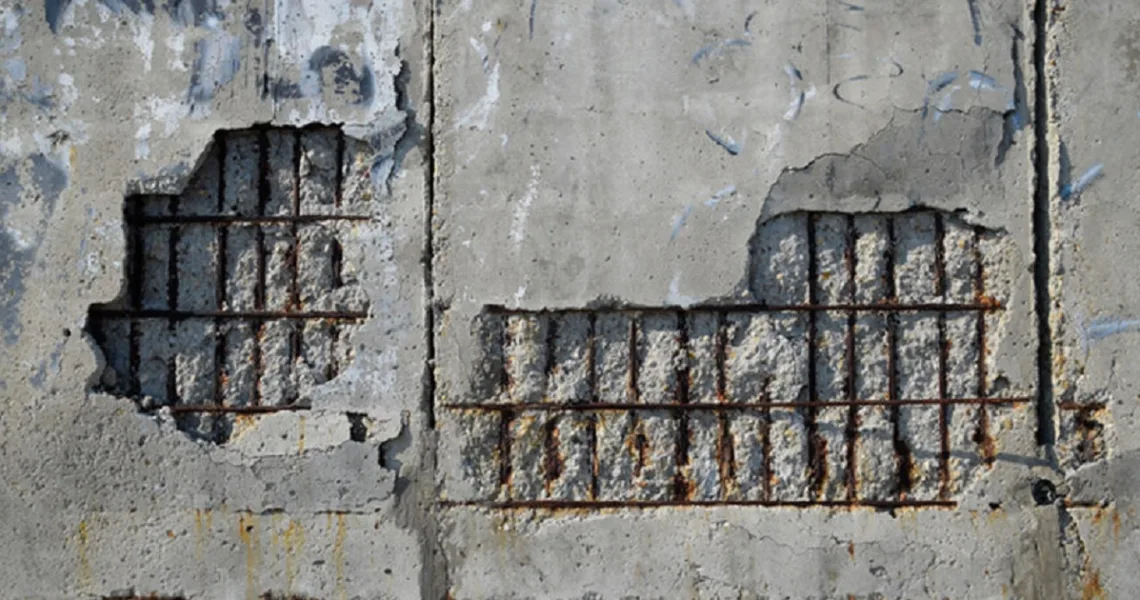
One of the most common questions in structural engineering is:
Why do steel bars corrode inside reinforced concrete structures?
Every year, billions of dollars are spent worldwide on repairing deteriorated concrete structures affected by reinforcement corrosion. Understanding the root causes of corrosion is essential for engineers, consultants, inspectors, and asset owners involved in structural assessment and rehabilitation.
In my technical publications and engineering courses, I discuss the science and practical engineering aspects of corrosion in reinforced concrete structures, including:
- Causes of reinforcement corrosion
- Concrete deterioration mechanisms
- Structural assessment methodologies
- Repair and strengthening techniques
- Remaining service life prediction
- Reliability and structural integrity evaluation
The detailed discussion is presented in my books available at:
Steel Reinforced Concrete Structure Assessment and Repair of Corrosion
and
Causes of Corrosion and Concrete Deterioration
Both books are available through my publications page:
https://elreedyman.com/publications/
Understanding Corrosion in Concrete Structures
Corrosion can be studied from two main perspectives:
- Chemical reactions
- Electrochemical and electrical theories
In this work, I combine both approaches from a practical engineering point of view. Engineers ultimately need practical solutions, but understanding the corrosion mechanisms is critical before selecting the appropriate repair strategy.
The most common causes of reinforcement corrosion include:
- Chloride attack
- Carbonation
- Sulphate exposure
- Aggressive environmental conditions
These agents may originate from:
- Marine environments
- Contaminated soil
- Groundwater
- Construction materials
- Industrial exposure
The propagation of carbonation and chloride diffusion inside concrete can be predicted using engineering models and mathematical equations. These methods help estimate:
- Corrosion initiation time
- Cracking and spalling of concrete cover
- Remaining structural service life
“Do Not Jump to the Conclusion”
One of the most important principles in structural assessment is:
“Do Not Jump to the Conclusion”
Before starting any repair work, a detailed structural assessment must be performed to identify the real root cause of deterioration.
For example:
If corrosion is caused by chlorides, it is essential to determine whether the chlorides originated:
- from outside the concrete, or
- from within the concrete mix itself.
The repair strategy and cost can vary dramatically.
In some cases:
- External chloride contamination may require relatively economical repair methods.
- Internal chloride contamination may increase repair costs by 10 to 50 times.
This is why proper condition assessment is always the first and most critical step.
Service Life of Concrete Structures
The time required for corrosion to initiate varies significantly from one structure to another depending on:
- Design quality
- Construction practices
- Concrete quality control
- Environmental exposure
- Maintenance history
With good construction quality and proper environmental conditions, many concrete structures can remain in service for more than 60 years before significant corrosion begins.
Predicting the remaining lifetime of a structure is a complex engineering task that depends on:
- Structural reliability
- Durability performance
- Inspection results
- Exposure conditions
- Maintenance and repair history
Repair or Replacement?
Another important engineering question is:
Is repair really necessary now?
Or:
Can the repair be delayed until funding becomes available?
The answer depends on:
- Structural reliability
- Structural system behavior
- Method of construction
- Design code requirements
- Consequences of failure
- Risk assessment
This concept forms part of the modern approach known as:
Structural Integrity Management
In many cases, the economic evaluation also becomes important. As a general engineering rule of thumb:
If repair costs exceed approximately 75% of the replacement cost, constructing a new structure may become the better option.
Learn More Through My Books and Engineering Courses
If you are interested in:
- Structural durability
- Corrosion engineering
- Concrete assessment
- Offshore structure reliability
- Structural integrity management
- Repair and strengthening techniques
You can explore my engineering books and online professional courses available through:
Publications:
https://elreedyman.com/publications/
Udemy Engineering Courses:
https://www.udemy.com/user/mohamed-a-el-reedy/
These resources are designed for:
- Structural engineers
- Civil engineers
- Consultants
- Asset integrity engineers
- Researchers
- Engineering students
- Offshore and industrial professionals
If you have technical questions, engineering challenges, or special structural assessment cases, feel free to contact me.
Dr. Mohamed A. El-Reedy
Structural Engineering Consultant
Expert in Structural Reliability, Corrosion, Offshore Structures, and Integrity Management