
Wind Loads on Temporary Structures: Design Considerations, Standards and Engineering Practice
Introduction
As per my last project an aluminum helideck over the high tower in Alamain-North coast with 100 m height. I go deeply in wind load. On the mean time there are a lot of advertising panel fall due to high wind speed in Cairo.
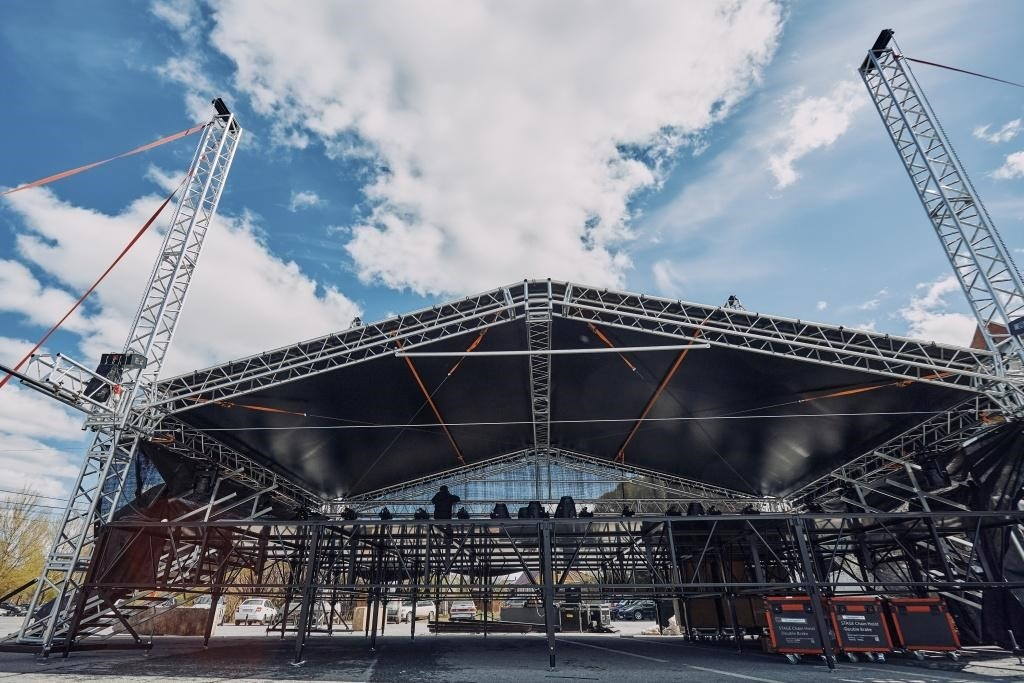
The most important issue is the temporary structures are widely used in construction, industrial facilities, entertainment venues, and public spaces. Examples include temporary roofs, concert stages, tents, scaffolding systems, advertising billboards, lighting towers, temporary grandstands, and equipment-support structures.
Although these structures are designed for relatively short periods, their exposure to environmental loads, particularly wind, can present significant safety challenges. Their temporary nature does not necessarily make them less vulnerable to wind-induced failure. Inadequate consideration of wind loads can lead to structural instability, collapse, damage to surrounding property, and potential loss of life.
This issue deserves particular attention in regions experiencing high wind speeds. For example, the failure of advertising panels during strong wind events in Cairo highlights the importance of proper structural design, anchorage, and maintenance.
During one of my previous projects involving the design of an aluminum helideck installed on a high-rise tower in Alamein, Egypt, at approximately 100 m elevation, I had to examine wind loading in considerable detail. This experience reinforced the importance of understanding wind effects on structures that may have unusual configurations, limited design lives, or specific operational requirements.
1. Understanding Wind Loads on Temporary Structures
One of the main considerations in temporary-structure design is the duration of exposure to environmental loads.
Because temporary structures have shorter service lives than conventional permanent buildings, some design standards allow wind loads to be adjusted to account for a reduced exposure period.
However, such reductions must be supported by applicable design provisions and a clear understanding of the structure’s intended service period, location, exposure conditions, and consequences of failure.
According to Gorlin (Journal of Architectural Engineering, ASCE, June 2009, pp. 35–36), temporary structures encompass a wide range of facilities, including concert and theatrical stages, tents, public art installations, temporary roofs and shade structures, lighting and speaker towers, temporary grandstands, and other similar installations.
The diversity of these structures makes establishing a single design approach challenging. Their structural systems, geometries, anchorage arrangements, and operational conditions can vary considerably.
2. Design Requirements Under the International Building Code (IBC)
The 2015 International Building Code (IBC), Section 3103, addresses temporary structures, generally covering structures erected for a period of less than 180 days, with certain exceptions, including tents and other membrane structures.
However, this section provides only general requirements concerning structural strength, fire safety, means of egress, accessibility, ventilation, and other aspects of public safety. It does not provide a specific procedure for determining reduced design wind loads for temporary structures.
Consequently, engineers may need to consult other applicable standards and technical guidelines when establishing appropriate wind-loading criteria.
3. ASCE 37 – Design Loads on Structures During Construction
One important reference is ASCE 37, Design Loads on Structures During Construction.
This standard provides provisions for considering the limited exposure period of structures during construction. It includes adjustment factors that can be applied to basic wind speeds specified in ASCE 7, depending on the anticipated construction period.
The factors presented in the reference discussed in this article are:
| Construction period | Wind speed factor |
|---|---|
| Less than six weeks | 0.75 |
| Six weeks to one year | 0.80 |
| One to two years | 0.85 |
| Two to five years | 0.90 |
hese factors illustrate how the anticipated exposure period can influence the design wind speed.
It is important to recognize that these provisions relate to their specified construction applications. Engineers should verify the applicable standard edition and confirm that the provisions are appropriate for the particular temporary structure under consideration.
4. UFC 1-201-01 – Non-Permanent DoD Facilities
Another useful technical reference is UFC 1-201-01, Non-Permanent DoD Facilities in Support of Military Operations, issued by the U.S. Department of Defense on 1 January 2013.
This document classifies non-permanent facilities into three categories according to their intended service life:
Initial Facilities
These facilities are established rapidly, generally with minimal external engineering design support. Typical examples include tents, containers, and fabric shelters.
Temporary Facilities
These buildings and facilities are designed and constructed for a service life of five years or less, generally using low-cost construction methods.
Semi-Permanent Facilities
These facilities are designed for a service life of less than ten years. With appropriate maintenance and upkeep of critical building systems, their service life may be extended to 25 years.
According to the cited UFC provisions, a reduction factor of 0.78 may be applied to the basic wind speed, V, used for permanent structures when designing qualifying temporary facilities, except in regions classified as hurricane-prone.
As with other reduction provisions, the applicability of this factor must be checked against the governing requirements and the specific conditions of the project.
5. ANSI E1.21 – Temporary Structures for Outdoor Entertainment
The entertainment industry also has specific guidance for temporary structures, particularly concert stages and overhead structures supporting lighting, speakers, and production equipment.
ANSI E1.21, developed by the Entertainment Services and Technology Association (ESTA), addresses temporary ground-supported overhead structures used to cover stage areas and support equipment during outdoor entertainment events.
The document considers the limited duration of exposure and the particular safety requirements associated with public events.
The cited provisions specify a design wind speed of 0.75 times the basic wind speed defined in ASCE 7.
This approach recognizes the special operating conditions of temporary entertainment structures. Nevertheless, appropriate attention must also be given to wind monitoring, operational restrictions, evacuation procedures, and safe dismantling arrangements.
6. Practical Engineering Considerations
Selecting an appropriate wind design criterion for a temporary structure requires more than simply applying a reduction factor.
The engineer should consider the following aspects:
- Structural configuration: Evaluate the geometry, exposed surfaces, structural system, and potential wind-induced instability.
- Location and exposure: Consider the basic wind speed, terrain characteristics, surrounding buildings, topography, and exposure conditions.
- Duration of installation: Establish the actual intended service period and the possibility of extending the installation beyond its original duration.
- Anchorage and foundations: Check the adequacy of foundations, ballast, ground anchors, connections, and supporting elements against wind-induced forces.
- Operational safety: Establish wind-speed thresholds for restricting use, evacuating personnel, or dismantling the structure.
- Inspection and maintenance: Ensure that connections, bracing systems, anchorage arrangements, and supporting components remain in satisfactory condition throughout the installation period.
Particular attention should be given to temporary structures accessible to the public. The consequences of failure may be significant even when the structure is intended to remain in service for only a few days or weeks.
7. Conclusions
Temporary structures should not be considered low-risk structures simply because of their limited service life.
Although certain standards provide provisions for adjusting wind loads based on exposure duration, these provisions must be applied carefully and only where their requirements are satisfied.
The engineer’s responsibility is to establish appropriate design criteria, assess the structural system and its supporting arrangements, and define the necessary operational safety measures.
Equally important is determining the wind-speed threshold at which specific actions must be taken, including restricting access, suspending activities, evacuating personnel, or safely dismantling the structure.
Ultimately, the objective is not simply to design a structure for a shorter period, but to ensure that it remains safe throughout its intended service life.
References
- ASCE 37 – Design Loads on Structures During Construction.
- ASCE 7 – Minimum Design Loads and Associated Criteria for Buildings and Other Structures.
- UFC 1-201-01 – Non-Permanent DoD Facilities in Support of Military Operations, 1 January 2013.
- ANSI E1.21 – Temporary Ground-Supported Overhead Structures Used to Cover the Stage Areas and Support Equipment in the Production of Outdoor Entertainment Events.
- International Building Code (IBC), 2015 Edition, Section 3103.
- Gorlin, Journal of Architectural Engineering, ASCE, June 2009, pp. 35–36.